Forage-Type Enzyme Selection for Corn, Alfalfa, and Grass Silage Additives
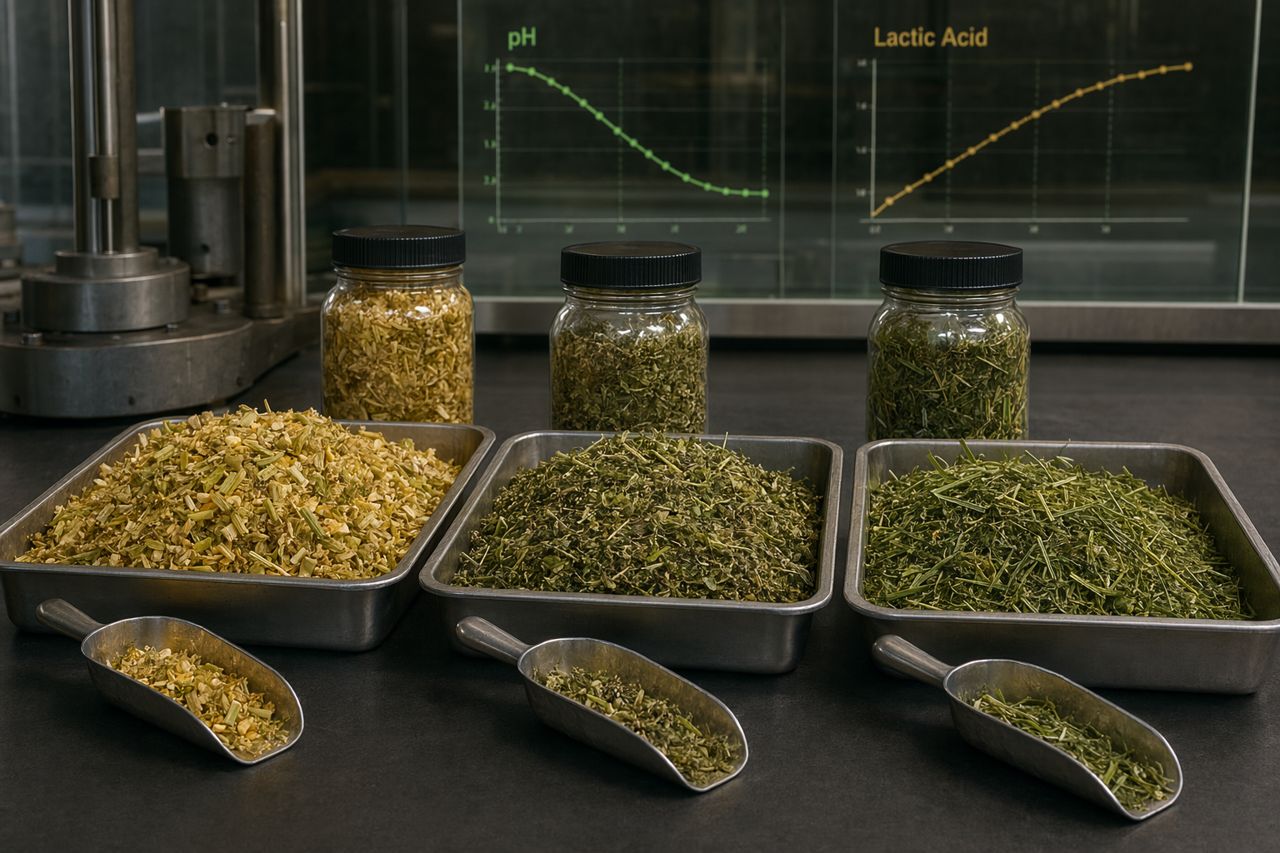
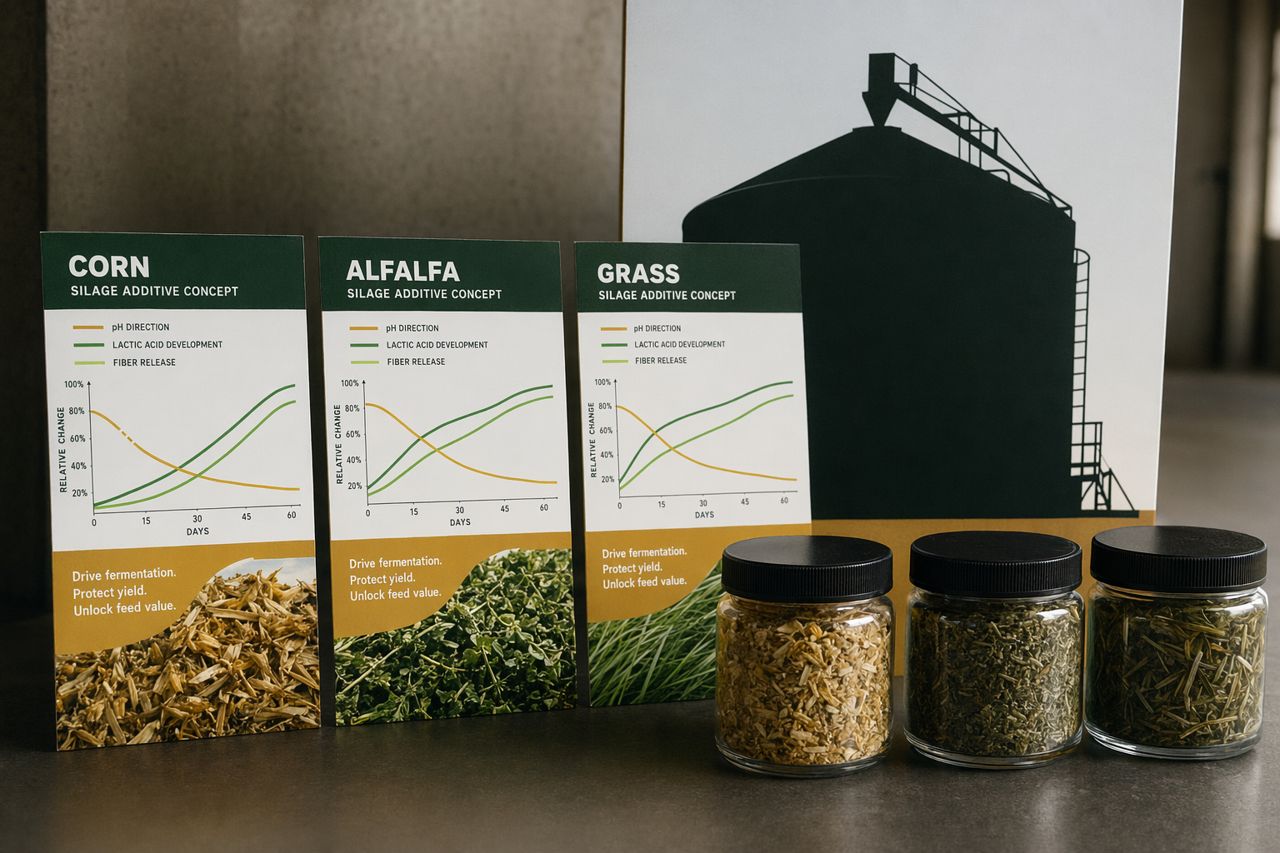
Forage type should change the enzyme decision. A corn silage additive, an alfalfa silage additive, and a grass silage additive may all sit under the same commercial category, but they do not place the same technical demand on an enzyme package.
For product managers and formulation teams, the goal is not to chase a generic enzyme description. The goal is to select an input that fits the substrate, survives the manufacturing route, stays compatible with the inoculant system, and supports repeatable fermentation outcomes in the field.
Enzymefarm works as a silage enzyme supplier for forage additive manufacturing, with enzyme selection built around formulation practicality: inclusion guidance, carrier fit, blend stability, technical documentation, and batch-to-batch reliability.
Why forage type changes the enzyme specification
The same enzyme family can behave differently across forage types because the substrate architecture is different. Cell wall composition, buffering pressure, moisture profile, crop maturity, chop consistency, and soluble carbohydrate availability all influence what the enzyme is expected to contribute.
A useful specification starts with three questions:
- What forage structure is the enzyme expected to open or modify?
- What fermentation outcome is the additive label positioned to support?
- What manufacturing format must the enzyme tolerate before it reaches the forage?
That combination matters more than a catalog-style enzyme name.
Corn silage: focus on fiber access and formulation consistency
Corn silage typically gives formulators a more predictable base than many grass systems, but it still requires disciplined enzyme selection. The common target is controlled support for fiber accessibility while keeping the finished additive stable, free-flowing, and compatible with the chosen microbial inoculant.
Practical selection priorities for corn silage additives
- Fiber-opening support: cellulase and hemicellulase profiles may be considered where the product claim is linked to improved access to structural carbohydrates.
- Starch-adjacent positioning: enzyme selection should avoid overpromising direct starch effects unless the formulation and field evidence support that claim.
- Carrier behavior: the enzyme must blend cleanly into the selected carrier without creating segregation, clumping, or release inconsistency.
- Inoculant compatibility: the enzyme package should not compromise the viability, dispersion, or intended function of the lactic acid bacteria system.
- Label discipline: documentation should help the commercial team state the intended function clearly and defensibly.
For corn silage lines, the best-fit enzyme package is usually one that is easy to manufacture repeatedly and supports a clean fermentation story without making the formulation more fragile.
Alfalfa silage: account for buffering and protein-fiber complexity
Alfalfa creates a different challenge. The crop can carry stronger buffering pressure and a more complex protein-fiber matrix. That makes enzyme choice especially dependent on the product’s full formulation strategy, not the enzyme alone.
Practical selection priorities for alfalfa additives
- Buffering-aware positioning: enzyme support should be aligned with the inoculant and acidification strategy rather than treated as a standalone fix.
- Pectin and hemicellulose relevance: depending on the forage profile and target claim, pectinase and hemicellulase contributions may be more relevant than a generic cellulase-only approach.
- Moisture and wilting assumptions: alfalfa additive performance can shift when real-world crop moisture varies from the development brief.
- Blend stability: alfalfa-focused products often need strong documentation around storage behavior, carrier interaction, and compatibility with other additive components.
- Conservative claim language: the specification should support commercially useful claims without implying that enzyme inclusion removes the need for correct ensiling practice.
For alfalfa, the manufacturing value is precision: a formulation-ready enzyme package that fits the intended inoculant system and does not create avoidable risk in release testing, storage, or field positioning.
Grass silage: design for variability
Grass silage systems can shift quickly by species mix, season, maturity, soluble sugar level, wilting pattern, and chop profile. That variability makes enzyme selection less about a fixed crop assumption and more about robust performance across a practical operating window.
Practical selection priorities for grass additives
- Broad substrate coverage: grass-focused products may benefit from enzyme packages that address multiple cell wall fractions rather than a narrow single-function profile.
- Moisture-band resilience: enzyme behavior should be assessed against the realistic moisture conditions your customers see, not only the ideal development case.
- Fast fermentation alignment: the enzyme package should support the inoculant strategy and the desired early fermentation direction.
- Application format fit: water-soluble, dry-blend, and premix formats place different demands on dispersion, dust behavior, and handling.
- Seasonal formulation logic: documentation should help your team decide whether one grass product is sufficient or whether a tiered product range is justified.
For grass silage additives, the commercial risk is variability. The enzyme specification should help reduce that risk rather than add another uncontrolled variable.
A practical forage-by-forage selection matrix
| Forage type | Main formulation challenge | Enzyme selection focus | Manufacturing watchpoint |
|---|---|---|---|
| Corn silage | Fiber access with repeatable product handling | Cellulase and hemicellulase balance suited to the claim | Carrier compatibility and dry-blend uniformity |
| Alfalfa silage | Buffering pressure and complex plant matrix | Pectinase, hemicellulase, and cellulase logic matched to inoculant strategy | Stability with other actives and defensible documentation |
| Grass silage | Seasonal and substrate variability | Broader cell wall support and moisture-band relevance | Dispersion, solubility, and product-range clarity |
This matrix is not a substitute for formulation work. It is a way to keep the enzyme discussion connected to commercial reality: what the product is, how it is manufactured, how it is stored, and what field outcome it is designed to support.
Compatibility checks before locking a specification
Before an enzyme input is approved for a silage additive line, Enzymefarm recommends reviewing the full formulation environment.
Key checks include:
- Compatibility with lactic acid bacteria and other inoculant components
- Fit with dry carrier, soluble carrier, or liquid premix format
- Blend uniformity during manufacturing and packing
- Storage stability under the expected supply chain conditions
- Handling behavior, including dust, flow, and segregation risk
- Documentation required by quality, regulatory, and commercial teams
- Repeatability across production batches
- Alignment between technical evidence and label positioning
The best enzyme on paper can become a poor commercial input if it creates plant-floor complexity, weak documentation, or avoidable batch variation.
Documentation your buyers and internal teams can use
For additive manufacturers, technical support must go beyond a basic product name. A useful enzyme supply package should help your team move from development to purchasing, quality approval, production, and commercial launch.
Enzymefarm can support forage additive manufacturers with:
- Enzyme selection guidance by forage type and target product position
- Formulation input for dry, soluble, and premix applications
- Compatibility review with inoculant systems and additive components
- Stability and handling guidance for manufacturing teams
- Batch documentation aligned with industrial purchasing requirements
- Practical inclusion guidance expressed for your finished-product format
- Support for custom blends where a single-enzyme approach is not enough
The aim is a specification your team can actually run: stable to source, straightforward to blend, and clear enough for quality release and commercial communication.
How to brief an enzyme supplier for faster selection
A clear technical brief shortens the development cycle. When contacting Enzymefarm, include as much of the following as possible:
- Target forage type: corn, alfalfa, grass, mixed forage, or regional crop blend
- Finished additive format: dry blend, water-soluble powder, liquid premix, or custom format
- Inoculant system or additive components already selected
- Desired product positioning and label direction
- Carrier system and manufacturing constraints
- Expected storage and distribution conditions
- Target customer region and typical forage conditions
- Current problem to solve: stability, compatibility, performance gap, cost-in-use, or product-line expansion
You do not need a finished formulation before the conversation starts. A practical brief is enough to identify the right enzyme direction and avoid mismatched inputs.
Request a quote
If you are developing or revising a silage additive line for corn, alfalfa, grass, or mixed forage, Enzymefarm can help define a formulation-ready enzyme input.
Use the on-site request a quote form to share your target forage, additive format, inoculant system, and preferred supply requirements. We will respond with a practical supply path, documentation expectations, and next-step formulation questions.